# Zeknd SuperChain Docs

#### ![](https://2332324777-files.gitbook.io/~/files/v0/b/gitbook-x-prod.appspot.com/o/spaces%2FJgm5yO5nkh6hRLUlRzT7%2Fuploads%2FPpfITdKj4RP3AWa7mQ8q%2F1.png?alt=media\&token=053cb441-c426-4f0e-9b4b-4b474629f2cb)

#### The Zeknd Chain Docs presents [o&#x70;***ZEKND***](https://opzeknd.xyz/), a revolutionary network designed for enterprises and focused on delivering a user-friendly blockchain experience to a large number of users.


# opZEKND Overview

The Zeknd SuperChain is a blockchain platform that empowers users in a secure and decentralized ecosystem. Its primary goal is to enable users to embrace decentralized technologies while safeguarding the privacy and security of their sensitive information.![](https://2332324777-files.gitbook.io/~/files/v0/b/gitbook-x-prod.appspot.com/o/spaces%2FJgm5yO5nkh6hRLUlRzT7%2Fuploads%2FBTGDRSvagWpSy4Rg9vTn%2F5.png?alt=media\&token=80d49b28-05d3-4140-9702-f58a4e58989e)

### A Next-Generation Blockchain Platform:

* Immediate Finality: opZEKND ensures instant confirmation of transactions, providing immediate finality for enhanced reliability.
* High TPS for Real-World Use Cases: opZEKND supports a high transaction per second (TPS) rate, catering to the demands of real-world applications.
* Cost-Efficient Blockchain Applications: opZEKND focuses on reducing the cost of running blockchain applications, making it more accessible and affordable for businesses.
* Lower Barriers to Entry: opZEKND aims to lower the barriers to entry for end-users, allowing more individuals and organizations to participate in the blockchain ecosystem.
* Streamlined Technology Adoption: opZEKND simplifies the technology adoption process for various industries, enabling smoother integration and implementation of blockchain solutions.

### opZEKND launched its mainnet, Zeknd Superchain, on April/27/2023 with the following specifications.

* 1-second block generation and confirmation time.
* 4,000 transactions per second.
* Low gas price that is almost 1/10 of Ethereum.
* Runs EVM (Ethereum Virtual Machine) and supports the execution of Solidity contracts.
* 19 reputable corporations worldwide initially formed opZEKND Governance Council to operate consensus nodes.&#x20;
* More than 50 initial service partners have committed to launch Blockchain Applications on Zeknd Superchain.


# Why opZEKND?

### How does the Zeknd Superchain compare to existing blockchain networks?

![](https://2332324777-files.gitbook.io/~/files/v0/b/gitbook-x-prod.appspot.com/o/spaces%2FJgm5yO5nkh6hRLUlRzT7%2Fuploads%2FdhYKUBjwPjWf0bA6Fv9w%2F2.png?alt=media\&token=401ec506-6933-4625-86fc-33d92119a00d)

The Zeknd Superchain sets itself apart from existing blockchain networks through its unique features and capabilities. Unlike traditional blockchain networks, the Zeknd Superchain leverages advanced technologies and optimizations to achieve enhanced scalability, higher transaction throughput, and lower fees.

Compared to Layer 1 (L1) networks, the Zeknd Superchain operates as a Layer 2 (L2) scaling solution, utilizing the OP Stack and OP Rollup technology. This allows the Superchain to overcome the scalability limitations of L1 networks and significantly increase transaction processing capacity.

Moreover, the Zeknd Superchain maintains compatibility with the Ethereum Virtual Machine (EVM), enabling developers to seamlessly migrate their Ethereum-based applications to the Superchain without major code modifications. This interoperability with the EVM ecosystem expands the possibilities for developers and promotes the growth of the Superchain's ecosystem.

Additionally, the Zeknd Superchain offers a user-friendly experience by reducing transaction fees and improving overall network efficiency. Users can enjoy faster confirmations and a smoother transaction experience, thanks to the Superchain's optimized infrastructure and innovative consensus mechanisms.


# opZEKND Ecosystem and Its Logical Subnetworks

<figure><img src="https://2332324777-files.gitbook.io/~/files/v0/b/gitbook-x-prod.appspot.com/o/spaces%2FJgm5yO5nkh6hRLUlRzT7%2Fuploads%2FhoPdgLmcTgmxO8mxy6Nu%2FGroup%203466101.png?alt=media&amp;token=debd4c6e-b4c3-4bb6-8202-bd9f57ec32b9" alt="" width="375"><figcaption><p>Zeknd Ecosystem and Its Logical Subnetworks</p></figcaption></figure>

1. **Zeknd Mainnet:**

* The core blockchain network of opZEKND provides the foundation for the entire ecosystem.
* Supports high transaction throughput and immediate finality for enhanced reliability.
* Powered by a Proof-of-Work (PoW) consensus mechanism and built based on OP Stack, ensuring security and decentralization.

2. **opZEKND DApps:**

* Decentralized Applications (DApps) built on the Zeknd Superchain, leveraging its infrastructure and features.
* Empowers developers to create innovative solutions across various industries, such as finance, supply chain, and gaming.
* Benefits from the secure and scalable nature of opZEKND, ensuring a robust and user-friendly DApp experience.

3. **opZEKND Governance:**

* A decentralized governance system that allows opZEKND token holders to participate in decision-making processes.
* Involves voting on protocol upgrades, network parameters, and the allocation of resources.
* Ensures community-driven development, fostering inclusivity and transparency in the ecosystem.

4. **opZEKND Marketplace:**

* An ecosystem-wide marketplace where users can exchange digital assets, services, and goods.
* Facilitates peer-to-peer transactions within the Zeknd Superchain, promoting economic activity and value creation.
* Supports various token standards and ensures secure and efficient transactions.

5. **opZEKND Developer Tools:**

* Comprehensive tools and resources for developers to build and deploy applications on the Zeknd Superchain.
* Includes SDKs, APIs, documentation, and developer support to streamline the development process.
* Encourages the growth of the developer community and fosters innovation within the ecosystem.

6. **opZEKND Partnerships:**

* Collaborations and strategic alliances with industry partners to foster adoption and integration of opZEKND.
* Engages with businesses, enterprises, and organizations to explore use cases and develop joint initiatives.
* Builds a strong network of partners to drive the growth and expansion of the Zeknd ecosystem.

7. **opZEKND Community:**

* A vibrant and engaged community of users, developers, and enthusiasts passionate about the Zeknd Superchain.
* Active participation in discussions, forums, and events, contributing to the development and improvement of the ecosystem.
* Promotes knowledge sharing, collaboration, and the sharing of ideas to propel the Zeknd ecosystem forward.

<br>


# Why BNB Chain?

opZEKND has chosen to conduct its presale on the BNB Chain for several strategic reasons. The BNB Chain is a well-established and highly popular blockchain network with a large user base and active community. By conducting the presale on the BNB Chain, opZEKND aims to tap into this existing network effect and leverage the wide reach and visibility provided by the BNB ecosystem.

By conducting the presale on the BNB Chain, opZEKND aims to garner attention and exposure from the BNB community, which can significantly contribute to its growth and adoption. This strategic decision allows opZEKND to position itself within a thriving and active blockchain community, attracting potential investors and supporters who are already familiar with the BNB ecosystem.

Additionally, the BNB Chain's robust infrastructure and high transaction throughput make it an ideal platform for conducting token sales and ensuring a smooth and efficient presale process. The scalability and reliability of the BNB Chain provide a solid foundation for opZEKND to facilitate the distribution of tokens to participants and effectively manage the presale phase.

By leveraging the popularity and strength of the BNB Chain, opZEKND aims to establish a strong foundation and gain early traction within the broader blockchain community. This strategic move positions opZEKND for long-term success and growth, enabling it to reach a wider audience and establish itself as a prominent player in the blockchain industry.


# ZEKND SUPERCHAIN MAINNET

### 1. Connect to opZEKND using MetaMask

To add opZEKND network to your MetaMask wallet, go to your Network Selection drop down menu, click Add Network and enter the following:

* Network Name: ZEKND SUPERCHAIN
* Explorer: <https://explorer.opzeknd.xyz>
* RPC URL: [https://dataseed.opzeknd.xyz](<https://dataseed.opzeknd.xyz&#xA;>)
* Chain ID: 6289
* Currency symbol: opZEKND
* Bridge UI: <https://opzeknd.xyz/bridge>

### 2. Deploy a Smart Contract to the opZEKND

Because any tool that works on Ethereum also works with opZEKND, you can deploy a smart contract to the testnet using your preferred scripting tool. Your basic RPC set-up will be the same. (Only cheaper and faster.)&#x20;

1. Select the standard smart contract you’d like to deploy.&#x20;
2. In the Environment field, select Injected Provider - MetaMask.&#x20;
3. Hit deploy.

**Pro-tip**: To deploy a smart contract or run a transaction, you may need to bridge assets from the BNB Testnet. You can do so using the following URL:&#x20;

* **Bridge**: <https://opzeknd.xyz/bridge>

### 3. Create and View a Transaction Using the Block Explorer

Using Remix or your preferred Ethereum scripting tool, perform the following:&#x20;

1. Select a smart contract with a deposit function.
2. Input the amount and select the symbol of the token you’d like to deposit.
3. Click deposit and authorize the transaction.&#x20;


# Technology Design Principles

### Zeknd's Technology Design Principles

1. Usability: opZEKND prioritizes user-friendly experiences, aiming to minimize the security obligations for end users during interactions. The platform enables developers to easily build, test, and deploy contracts using familiar programming languages. The goal is to provide end users with seamless experiences similar to those on traditional web platforms.
2. Scalability: opZEKND is designed to scale infinitely as the network's capacity is utilized. Through innovative scaling techniques, such as sidechains and other scalability solutions, the platform can accommodate increasing transaction volumes and network demands.
3. Security: Security is a fundamental aspect of opZEKND's design. It leverages a robust Proof-of-Work (PoW) consensus mechanism to ensure the integrity and immutability of the blockchain. Additionally, advanced cryptography, including zero-knowledge proofs, is utilized to protect user privacy and secure transactions.
4. Simplicity: opZEKND follows a principle of simplicity in the design of its components. Each system component is designed to be as simple as possible while fulfilling its primary purpose. This approach ensures efficiency, maintainability, and ease of integration.
5. Sustainable Decentralization: opZEKND strives for sustainable decentralization by lowering the barriers for participation in the network as a validating node. This inclusive approach encourages a diverse range of participants to contribute to the network's security and consensus. Additionally, opZEKND ensures that transactions made in the future maintain the same level of security as those made today, safeguarding the value they modify.

By incorporating these design principles, opZEKND aims to create a blockchain platform that is user-friendly, scalable, secure, and sustainable.

<br>


# Consensus Mechanism

Consensus mechanisms play a crucial role in blockchain technology, enabling trustless entities to reach a consensus on the validity of blocks. The performance of blockchain networks greatly depends on the efficiency of the adopted consensus mechanisms, directly impacting the usability of Blockchain Applications.

### In the case of opZEKND Mainnet, the platform showcases exceptional performance with the following key features:

1. High Transaction Throughput: Zeknd Mainnet has the capability to handle an impressive 4,000 transactions per second, ensuring efficient and seamless transaction processing.
2. Immediate Transaction Finality: Transactions on Zeknd Mainnet achieve instant finality, eliminating any uncertainties and ensuring the immediate confirmation of transactions.
3. Fast Block Generation: Zeknd Mainnet boasts a remarkable one-second block generation time, contributing to the platform's overall speed and responsiveness.
4. Robust Consensus Participation: Zeknd Mainnet enables over 50 consensus nodes to actively participate in the consensus process, ensuring a distributed and secure network.

### Consensus Mechanism in Zeknd Superchain <a href="#consensus-mechanism-in-klaytn" id="consensus-mechanism-in-klaytn"></a>

The Zeknd Superchain utilizes a unique and powerful combination of Zero Knowledge (ZK) proofs and Proof of Work (PoW) consensus mechanism to ensure the security, privacy, and efficiency of its blockchain network.

1. Zero Knowledge Proofs: Zeknd leverages Zero Knowledge proofs, a cryptographic technique that allows a party to prove the validity of a statement without revealing any underlying information. This means that transactions and claims can be verified without exposing sensitive data, preserving user privacy and confidentiality.
2. Proof of Work: Zeknd employs the PoW consensus mechanism, which requires network participants, known as miners, to solve complex mathematical puzzles to validate transactions and add blocks to the blockchain. This process ensures that the network remains secure and resistant to malicious attacks, as it requires a significant amount of computational power.

By combining Zero Knowledge proofs and Proof of Work, Zeknd achieves several key benefits:

* Security: The PoW mechanism provides a high level of security by requiring miners to invest computational resources, making it difficult for malicious actors to alter the blockchain's history.
* Privacy: Zero Knowledge proofs allow users to engage in transactions and interactions without revealing any sensitive information, ensuring their privacy is protected.
* Efficiency: The PoW mechanism enables Zeknd to achieve a high transaction throughput, ensuring fast and reliable transaction processing.

The combination of Zero Knowledge proofs and Proof of Work in the Zeknd Network creates a powerful and secure environment where users can confidently engage in transactions, knowing that their privacy and security are prioritized.

<br>


# Layer 2 based on OP Stack

## High-performance layer 2 solution

OpZEKND, powered by the bedrock version of Optimism opStack, is a Layer 2 scaling solution specifically designed for the ZEKND SuperChain. It operates by offloading transaction processing and resource usage from the Zeknd Chain while still maintaining data compatibility with the underlying mainnet. Users can engage with the opZEKND network by depositing funds from ZRC-20 and utilizing applications and contracts within the opZEKND ecosystem. Through the aggregation of transactions by sequencers, computation of state transitions, and submission to the rollup contract on ZRC-20, opZEKND ensures the validity of state transitions through cryptographic proofs generated by provers. Verifiers then verify the correctness of the opZEKND state by checking these proofs. With its core functionalities of fund deposits and withdrawals, smart contract usage, and access to network data, opZEKND offers high throughput and low fees. Leveraging Layer 2 technology, opZEKND transcends the limitations of the Zeknd Chain, providing users with an enhanced and scalable experience.


# Zeknd Virtual Machine (ZEVM)

<figure><img src="https://2332324777-files.gitbook.io/~/files/v0/b/gitbook-x-prod.appspot.com/o/spaces%2FJgm5yO5nkh6hRLUlRzT7%2Fuploads%2Fng6cyeJPr1OF66saS2Eq%2FGroup%203466104.png?alt=media&amp;token=4df0850a-5564-48d2-a0a0-268d6123f9f9" alt=""><figcaption></figcaption></figure>

ZEVM, the Zeknd Virtual Machine, is a cutting-edge execution environment designed specifically for the Zeknd platform. Derived from the Ethereum Virtual Machine (EVM), ZEVM combines its foundation with innovative enhancements to cater to the unique requirements of the Zeknd ecosystem.

As an evolving technology, ZEVM is continuously improved by the Zeknd team to optimize its performance and capabilities. Therefore, it's important to note that the information presented in this document may be subject to frequent updates as ZEVM evolves.

With ZEVM, developers can execute smart contracts and decentralized applications seamlessly. It operates as a virtual state machine, governing how the system state evolves based on bytecode instructions and contextual data. ZEVM's execution model ensures efficient computation by imposing bounds through the use of gas, which limits the total computational workload.

ZEVM executes Zeknd bytecode, a sequence of instructions specific to the Zeknd blockchain. This bytecode is associated with accounts and is executed whenever a message is sent to those accounts. It empowers developers to interact with storage, send messages, and perform computations, enabling the creation of complex and powerful decentralized applications.

In summary, ZEVM is a powerful virtual machine that serves as the execution engine for smart contracts and dApps on the Zeknd platform. Through its optimized design and continuous improvements, ZEVM enables efficient and secure execution, unlocking the full potential of decentralized applications in the Zeknd ecosystem.

### Basic

ZEVM, the Zeknd Virtual Machine, introduces a streamlined and enhanced architecture designed to optimize performance and security. Building upon the foundations of the standard von Neumann architecture, ZEVM introduces several key modifications to suit the specific needs of the Zeknd ecosystem.

At its core, ZEVM employs a simple stack-based architecture with a word size of 256 bits. This choice enables efficient cryptographic operations, such as the Keccak-256 hash scheme and elliptic-curve computations. Memory in ZEVM follows a straightforward word-addressed byte array model, while the stack has a maximum size of 1024, ensuring efficient execution of operations.

Notably, ZEVM incorporates an independent storage model, distinct from memory. Storage, represented as a word-addressable word array, is a nonvolatile component of the system state, preserving data across transactions. In contrast, memory is volatile and resets to a well-defined zero state with each execution.

Unlike traditional architectures, ZEVM separates program code from general memory and storage. Code is securely stored in a virtual read-only memory, accessible only through specialized instructions. This design enhances security and prevents unauthorized manipulation of the codebase.


# Hidden Validators

To bolster the security of the Zeknd Superchain, the concept of Hidden Validators is employed. These Hidden Validators form smaller committees assigned to each shard, typically consisting of around 100 validators. Their primary role is to verify the integrity of each chunk within their respective shards. However, unlike traditional validation mechanisms that publicly assign validators, Zeknd takes a different approach.

Rather than openly disclosing shard assignments on the blockchain, opZEKND leverages a technique where validators individually determine their assignments in a private manner. Using a Verifiable Random Function (VRF), each validator randomly draws a set of shard IDs, allowing them to know which specific shards they are responsible for verifying. This privacy-centric approach adds an additional layer of security to the network.

By employing this methodology, corrupting a Hidden Validator becomes significantly more challenging for adversaries. To compromise the system, an attacker would need to bribe a substantial number of validators across all shards to reveal their assignments, making coordinated attacks prohibitively difficult.

Moreover, opZEKND introduces an element of randomness in the selection of hidden validators assigned to a particular block. This prevents adversaries from accurately determining the number of hidden validators they need to corrupt to execute a successful attack. The lack of these information thwarts tactics where attackers could strategically plan their moves based on knowledge of validator assignments.

The verification process carried out by Hidden Validators enables any individual validator to present a proof known as a "fraud proof" if they detect any invalid chunks. This capability ensures the integrity of the network by allowing validators to expose fraudulent behavior.

The selection of the smaller per-shard committee, including Hidden Validators, occurs in every epoch, which spans approximately half a day. These committees are chosen from the same pool of nodes that participate as block and chunk producers. For instance, if there are 100 seats per shard and 100 shards, resulting in a total of 10,000 seats, 100 seats are allocated to chunk producers, while the remaining seats are assigned to Hidden Validators.

In summary, opZEKND's implementation of Hidden Validators introduces an innovative and privacy-focused approach to enhance the security of the network. By combining random assignment, private shard verification, and the ability to present fraud proofs, opZEKND ensures the integrity and resilience of its blockchain ecosystem.


# Cross-Chain Compatibilities

opZEKND recognizes the importance of enabling cross-chain communication and cross-shard interactions while ensuring the validity of incoming transactions from other chains. To address this challenge, Zeknd incorporates a carefully designed approach for validating cross-chain transactions, focusing on scalability, security, and efficient state management.

The approach adopted by opZEKND for cross-chain compatibility involves the use of a Beacon Chain and a carefully selected committee of validators. Here's an overview of the design principles:

1. Beacon Chain Verificatio&#x6E;**\***: opZEKND employs a Beacon Chain, which serves as a central entity responsible for verifying the state transitions of all chains within the network. This verification process is carried out by a subset of validators, ensuring that the integrity of the entire network is upheld. In the event of any detected issues, a rollback mechanism is activated, guaranteeing atomicity and preserving the overall consistency of the network.
2. Validator Rotation: To enhance security, opZEKND implements a daily rotation of validators for each shard. This rotation adds an additional layer of protection against adaptive adversaries. By regularly changing the composition of validators, Zeknd mitigates the risk of a shard's validators being corrupted within a given day.
3. Smaller Committee for Rapid Validation: opZEKND leverages a smaller committee that operates at a faster rotation rate, validating transactions across multiple shards. This committee is responsible for efficiently verifying the affected portions of the state without the need to download the entire state of each shard. By focusing on the specific parts of the state impacted by a transaction, the committee achieves faster validation without compromising security.
4. Efficient State Management: opZEKND recognizes the challenge of handling large amounts of state data resulting from transactions. To address this, the network adopts innovative techniques to handle state changes efficiently. Rather than sending the entire state with each change, opZEKND employs methods such as delta-based updates or partial state transfers. This approach ensures that only the relevant portions of the state are transmitted, reducing bandwidth requirements and optimizing network performance.

By incorporating these design principles, opZEKND creates a robust framework for cross-chain compatibilities. It provides scalability, security, and efficient state management, enabling seamless communication and interaction between different chains within the opZEKND ecosystem. Through this approach, opZEKND facilitates the secure exchange of assets and information across multiple chains, fostering interoperability and expanding the possibilities of decentralized applications.

{% hint style="info" %}
In the context of blockchain networks, a beacon refers to a specific component or entity within the system. It is not a standalone chain itself, but rather a concept or role within the network architecture.

A beacon is typically a separate chain or a specific mechanism designed to provide a central coordination point or verification mechanism for the entire network. It acts as a reference or guide for other chains or shards within the system. The beacon chain is responsible for verifying the state transitions of other chains, coordinating consensus, and ensuring the overall integrity and security of the network.
{% endhint %}


# Storage

### Optimizing Storage Efficiency

As the ZEKND blockchain continues to grow with the addition of new blocks, the accumulation of chain data becomes inevitable. These chain data are essential for node operations and are stored in the node storage using a data structure called a trie, which is ultimately stored in a LevelDB database. However, the increase in blocks also results in an increase in chain data stored, leading to higher storage costs.

To address this challenge, opZEKND introduces a feature known as State Migration, specifically designed to reduce the required storage space. State Migration focuses on state tries, which constitute the majority of the chain data. It selectively removes state trie nodes that are no longer necessary for processing new blocks, effectively streamlining the storage requirements.

During the State Migration process, only the state trie nodes that are reachable from the state trie root of a specific block are retained. This means that irrelevant state trie nodes are deleted, leaving behind only the essential data needed for node synchronization. This includes the state trie nodes of the target block as well as any newly added blocks.

By implementing State Migration, opZEKND significantly improves storage efficiency by eliminating redundant and obsolete data, allowing nodes to operate more efficiently. This optimization reduces the overall storage costs associated with the growing chain data, ensuring that the blockchain remains scalable and cost-effective.


# Zeknd Superchain

Amidst the evolving blockchain landscape, scalability remains a crucial hurdle. Introducing opZEKND, a revolutionary Layer 2 scaling solution that addresses the limitations of Layer 1 networks. With its robust EVM-compatible platform, opZEKND empowers developers to build open ecosystems, migrate applications to Zeknd Superchain, and extend their user reach.

<figure><img src="https://2332324777-files.gitbook.io/~/files/v0/b/gitbook-x-prod.appspot.com/o/spaces%2FJgm5yO5nkh6hRLUlRzT7%2Fuploads%2FyVSHoqGT9kI6fg3oWtfg%2FScreenshot%202023-06-02%20at%2016.18.15.png?alt=media&amp;token=e94d09f3-b8e7-4246-8ed1-c29ddd3f5c6c" alt=""><figcaption></figcaption></figure>

**Zeknd Network** operates on several networks each operating with their own independent validators and unique state. These networks are as follows:

* [`mainnet`](https://docs.near.org/concepts/basics/networks#mainnet)
* [`testnet`](https://docs.near.org/concepts/basics/networks#testnet)
* [`betanet`](https://docs.near.org/concepts/basics/networks#betanet)
* [`localnet`](https://docs.near.org/concepts/basics/networks#localnet)

### Mainnet[​](https://docs.near.org/concepts/basics/networks#mainnet) <a href="#mainnet" id="mainnet"></a>

`mainnet` is for production-ready smart contracts and live token transfers. Contracts ready for `mainnet` should have gone through rigorous testing and independent security reviews if necessary. `mainnet` is the only network where state is guaranteed to persist over time *(subject to the typical security guarantees of the network's validation process)*.

* Name: Zeknd Superchain
* RPC: <https://dataseed.opzeknd.xyz>
* Chain ID: 6289
* Block Explore: <http://explorer.opzeknd.xyz>

### Testnet[​](https://docs.near.org/concepts/basics/networks#testnet) <a href="#testnet" id="testnet"></a>

`testnet` is a public network and the final testing network for `zekndnetwork` changes before deployment to `mainnet`. `testnet` is intended for testing all aspects of the Zeknd Network platform prior to `mainnet` deployment. From account creation, mock token transfers, development tooling, and smart contract development, the `testnet` environment closely resembles `mainnet` behavior. All `zekndnetwork` changes are deployed as release candidates on first testnet, before the changes are released on `mainnet`. A number of `testnet` validators validate transactions and create new blocks. dApp developers deploy their applications on `testnet` before deploying on `mainnet`. It is important to note that `testnet` has its own transactions and states.

* Name: Zeknd Superchain ( Testnet)
* RPC: <https://testnet-dataseed.opzeknd.xyz/>
* Chain ID: 6162
* Block Explore: <https://testnet-explorer.opzeknd.xyz/>

### Betanet[​](https://docs.near.org/concepts/basics/networks#betanet) <a href="#betanet" id="betanet"></a>

`betanet` is a public network, where `zekndsuperchain` is run to test its stability and backward compatibility. Validators on `betanet` are participants in the Betanet Analysis Group, where they engage in active discussions, submit bug reports, and participate in issue resolution. On `betanet`  changes, there are automated hard forks, where the state is compressed into a new genesis. As such, new genesis exists frequently on `betanet`, and there are no historical data snapshots. `betanet` usually has daily releases with protocol features that are not yet stabilized. State is maintained as much as possible but there is no guarantees with its high volatility.

### Localnet[​](https://docs.near.org/concepts/basics/networks#localnet) <a href="#localnet" id="localnet"></a>

`localnet` is intended for developers who want to work with the Zeknd Superchain platform independent of the public blockchain. You will need to generate nodes yourself. `localnet` gives you total control over accounts, economics, and other factors for more advanced use cases (including making changes to `zekndnetwork`). For developers, `localnet` is the right choice if you prefer to avoid leaking information about your work during the development process.


# Transaction Fee

## Transaction Fees

The transaction fee for the current Zeknd virtual machine (ZEVM) is calculated as follows:(Transaction Fee) := (Gas Used) \* (Base Fee)

* The `Gas Used` is computed by ZEVM based on the gas cost of the opcode and the intrinsic gas cost.
* `Base Fee` is the actual gas price used for the transaction. It has the same meaning as the `Effective Gas Price`.

This calculated transaction fee is subtracted from the sender's or fee payer's account balance, depending on the transaction.

### Gas and Base Fee Overview <a href="#gas-and-base-fee-overview" id="gas-and-base-fee-overview"></a>

#### Gas <a href="#gas" id="gas"></a>

Every action that changes the state of the blockchain requires gas. When a node processes a user's transaction, such as sending ZEKND, executing a contract, the user has to pay for the computation and storage usage. The payment amount is decided by the amount of `gas` required.`Gas` is a measuring unit representing how much calculation is needed to process the user's transaction.

#### Dynamic Gas Fee Mechanism <a href="#dynamic-gas-fee-mechanism" id="dynamic-gas-fee-mechanism"></a>

Dynamic gas fee policy provides a stable service to users by preventing network abuse and storage overuse. The gas fee changes according to the network situation. Seven parameters affect the `base fee(gas fee)`:

1. 1.PREVIOUS\_BASE\_FEE: Base fee of the previous block
2. 2.GAS\_USED\_FOR\_THE\_PREVIOUS\_BLOCK: Gas used to process all transactions of the previous block
3. 3.GAS\_TARGET: The gas amount that determines the increase or decrease of the base fee (30 million at the moment)
4. 4.MAX\_BLOCK\_GAS\_USED\_FOR\_BASE\_FEE: Implicit block gas limit to enforce the max basefee change rate (60 million at the moment)
5. 5.BASE\_FEE\_DELTA\_REDUCING\_DENOMINATOR: The value to set the maximum base fee change to 5% per block (20 at the moment, can be changed later by governance)
6. 6.UPPER\_BOUND\_BASE\_FEE: The maximum value for the base fee (750 ston at the moment, can be changed later by governance)
7. 7.LOWER\_BOUND\_BASE\_FEE: The minimum value for the base fee (25 ston at the moment, can be changed later by governance)

#### Base Fee <a href="#base-fee" id="base-fee"></a>

The basic idea of this algorithm is that the `base fee` would go up if the gas used exceeds the base gas and vice versa. It is closely related to the number of transactions in the network and the gas used in the process. There is an upper and lower limit  `base fee` to prevent the fee from increasing or decreasing indefinitely. There is also a cap for the gas and an adjustment value for the fluctuation to prevent abrupt changes in the `base fee`. The values can be changed by governance.

#### Transaction Replacement <a href="#transaction-replacement" id="transaction-replacement"></a>

Zeknd currently does not provide a way to replace a transaction using the unit price but may support different methods for transaction replacement in the future. Note that in Ethereum, a transaction with a given nonce can be replaced by a new one with a higher gas price.


# zBridge

The blockchain ecosystem is characterized by a multitude of independent chains, each with its own unique features and functionalities. However, this fragmentation often poses challenges when it comes to interoperability and seamless communication between different chains. Recognizing this need for cross-chain connectivity, Zeknd has developed a groundbreaking solution through its ecosystem bridges.

Zeknd's ecosystem bridges serve as the vital link that connects various blockchain networks, enabling users to transfer tokens and assets seamlessly between different chains. With these bridges in place, users can unlock a whole new realm of possibilities and leverage the advantages offered by different networks. Whether it's moving tokens from the Binance Smart Chain to the Zeknd Network or vice versa, Zeknd's ecosystem bridges ensure a secure, efficient, and frictionless transfer of assets across chains.

By building these bridges, Zeknd eliminates the siloed nature of individual chains and opens up a world of opportunities for users. Now, they can take advantage of different blockchain ecosystems, access a broader range of decentralized applications, and explore various investment strategies. Zeknd's ecosystem bridges truly revolutionize the way users interact with blockchain networks, fostering a more interconnected and collaborative environment.


# Rewarding Early Supporters: Unlocking Bonus % for Presale Participants

At Zeknd, we believe in recognizing and rewarding the early supporters who contribute to the growth and success of our platform. As part of our commitment to building a strong community, we are excited to introduce a special bonus program for those who participated in the presale of $ZEKND tokens.

Presale participants who successfully transfer their $ZEKND tokens from the Binance Smart Chain to the Zeknd Network will be eligible to receive an additional 30% bonus of $ZEKND tokens. This means that by taking part in the presale, individuals not only secure their initial token holdings but also gain an extra 30% in bonus tokens.

This bonus program serves as a testament to our appreciation for early supporters and their belief in the Zeknd project. We want to ensure that those who contribute to the presale are rewarded and incentivized to actively engage with the Zeknd ecosystem. By offering this significant bonus percentage, we aim to empower our community members, allowing them to maximize the value of their $ZEKND holdings and further participate in the growth of our platform.

In summary, Zeknd's ecosystem bridges revolutionize cross-chain connectivity, enabling seamless token transfers between different blockchain networks. Additionally, our commitment to rewarding presale participants with an exclusive 30% bonus reflects our appreciation for early supporters and their valuable contributions to the Zeknd project. Join us in the presale of $ZEKND tokens and be part of a vibrant and interconnected blockchain ecosystem.


# ZekID

ZekID is an identity solution offered by Zeknd that aims to provide users with a secure and decentralized way to manage their digital identities. It allows individuals to create and control their unique digital identities on the Zeknd network, granting them ownership and control over their personal information.

With ZekID, users can securely authenticate themselves and access various services and applications within the Zeknd ecosystem. It leverages blockchain technology to ensure the integrity and immutability of identity records, enhancing security and privacy.

One of the key benefits of ZekID is its interoperability. It enables users to seamlessly interact with different platforms and applications that support ZekID authentication, eliminating the need for multiple usernames and passwords. This simplifies the user experience and reduces the risk of identity theft or unauthorized access.

ZekID also emphasizes privacy by allowing users to control the disclosure of their personal information. Users can choose which attributes of their identity to share, providing a granular level of privacy control.


# dApps

In the exciting world of blockchain technology, Zeknd emerges as a trailblazing platform, pushing the boundaries of innovation and paving the way for a decentralized future. At the heart of this groundbreaking ecosystem lies Zeknd's dApps, the first product born from the visionary minds behind Zeknd Network.

<figure><img src="https://2332324777-files.gitbook.io/~/files/v0/b/gitbook-x-prod.appspot.com/o/spaces%2FJgm5yO5nkh6hRLUlRzT7%2Fuploads%2FRVlMvCLpwaUK2dw72vRS%2FCompetitor%20Analysis.png?alt=media&amp;token=20117888-d6c4-400b-aede-17e29c2398ff" alt=""><figcaption></figcaption></figure>

With the alpha launch of Zeknd's dApps, a new era of possibilities unfolds. This cutting-edge solution enables seamless cross-chain swaps and transfers, revolutionizing the way users engage with digital assets across multiple blockchain networks. By harnessing the power of Zeknd Network's robust infrastructure, dApps empowers individuals and organizations to effortlessly navigate the intricate world of cross-chain transactions.

By leveraging Zeknd's advanced technology, users can transcend the limitations of a single blockchain and explore the vast landscape of decentralized finance (DeFi) with ease. Whether it's exchanging tokens, transferring assets, or participating in cross-chain liquidity pools, Zeknd's dApps provides a secure and user-friendly experience that opens doors to a wealth of opportunities.

Built upon the solid foundation of Zeknd Network, dApps embodies the ethos of decentralization, privacy, and security. With a strong focus on user empowerment, dApps enables individuals to have full control over their digital assets, eliminating the need for intermediaries and placing the power back into the hands of the users.


# Dashboard

Zeknd's dApps Dashboard is a cutting-edge tool designed to empower users in their interaction with decentralized applications (dApps) on the Zeknd Network. With its sleek and intuitive interface, the Dashboard provides users with centralized control and real-time insights into their digital assets and activities across multiple blockchain networks.

<figure><img src="https://2332324777-files.gitbook.io/~/files/v0/b/gitbook-x-prod.appspot.com/o/spaces%2FJgm5yO5nkh6hRLUlRzT7%2Fuploads%2Fm8V2zIlLv3A3k0OkmG90%2FScreenshot%202023-06-02%20at%2016.36.02.png?alt=media&amp;token=b1e882f8-2dc1-4532-9f26-8365cbb8a30a" alt=""><figcaption></figcaption></figure>

The Dashboard's portfolio management feature allows users to effortlessly track and monitor their token holdings, view transaction history, and gain valuable performance insights. It enables informed decision-making and optimization of decentralized strategies.

Beyond portfolio management, the Dashboard offers seamless connectivity to various decentralized platforms and liquidity pools, enhancing the dApp experience. Users can navigate multiple dApps and blockchain networks through a unified interface, simplifying the complexities of decentralized finance (DeFi) and expanding opportunities.

Security and privacy are paramount in the Zeknd dApps Dashboard. Built on the robust infrastructure of Zeknd Network, it incorporates advanced encryption and authentication measures to safeguard sensitive information and digital assets, ensuring a secure user experience.


# Cross-Chain Swap

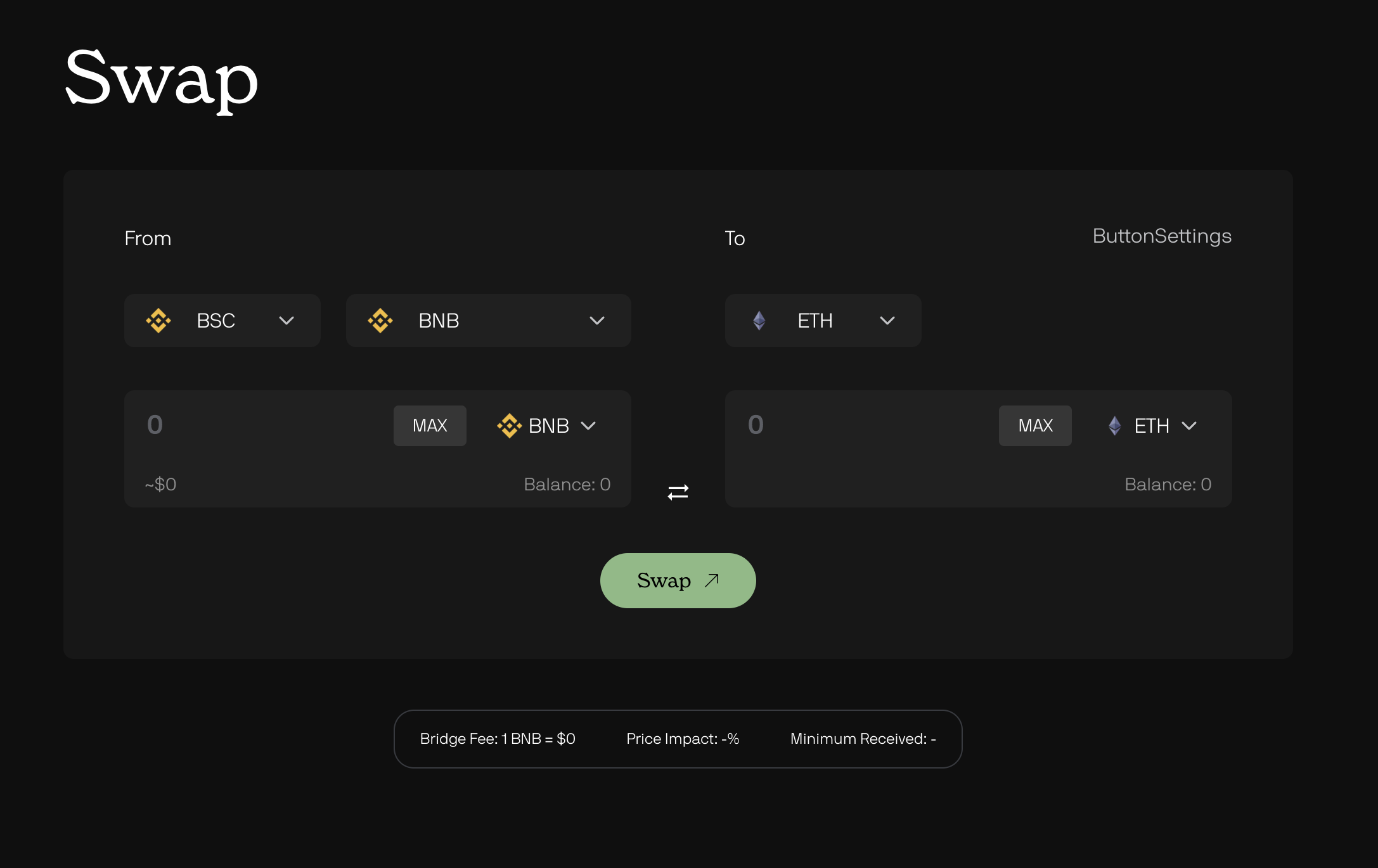
Zeknd's dApps take decentralized applications to the next level by incorporating Cross-Chain Swap functionality. With **Cross-Chain Swap**, users can effortlessly exchange assets between different blockchain networks, breaking down barriers and unlocking new possibilities for asset interoperability.

<figure><img src="https://2332324777-files.gitbook.io/~/files/v0/b/gitbook-x-prod.appspot.com/o/spaces%2FJgm5yO5nkh6hRLUlRzT7%2Fuploads%2Fu9mEiLXzTFStaBq7SbeH%2FScreenshot%202023-06-02%20at%2016.37.45.png?alt=media&amp;token=de010f73-bdf0-4b87-8599-b7c013224acf" alt=""><figcaption></figcaption></figure>

Powered by Zeknd's robust infrastructure, Cross-Chain Swap ensures secure and trustless asset transfers. Users can seamlessly swap tokens between different blockchains without relying on centralized exchanges or intermediaries, providing a truly decentralized and efficient experience.

The Cross-Chain Swap feature within Zeknd's dApps leverages advanced cryptographic techniques and smart contract protocols to enable cross-network transactions. It enables users to tap into liquidity pools, access a wider range of assets, and take advantage of arbitrage opportunities across multiple blockchain ecosystems.

With Cross-Chain Swap, users gain the flexibility to diversify their portfolios, access new investment opportunities, and optimize their asset allocation strategies. Whether it's swapping between Ethereum, Binance Smart Chain, or other compatible blockchains, Zeknd's dApps make cross-chain asset transfers fast, secure, and user-friendly.


# Staking

The Staking dApps offered by Zeknd enable users to engage in staking activities in a user-friendly and intuitive manner. Users have the option to become validators by running their own nodes and participating in block production and validation. Validators play a crucial role in maintaining the integrity and security of the network by proposing and validating new blocks.


# Manage Liquidity

Zeknd's dApps go beyond traditional decentralized applications by offering advanced Liquidity Management capabilities. With Zeknd, users can efficiently manage their liquidity across multiple blockchain networks, enabling them to optimize and maximize the potential of their assets.

Through Zeknd's Liquidity Management feature, users can seamlessly deploy their assets into various liquidity pools, earning rewards and generating income through liquidity provision. By participating in decentralized exchanges and liquidity protocols, users can contribute to the liquidity ecosystem while earning fees and incentives.

With Zeknd, liquidity management becomes more accessible and efficient, enabling users to navigate the decentralized finance (DeFi) landscape with confidence. By harnessing the power of liquidity pools, users can benefit from enhanced capital efficiency, reduced slippage, and increased access to decentralized trading opportunities.


# Mining

Zeknd's dApps ecosystem is enhanced with the inclusion of Mining capabilities, providing users with the opportunity to earn rewards through secure and efficient mining operations.

With Zeknd's Mining dApp, users can participate in the process of validating and securing blockchain transactions while earning rewards in the form of native tokens. Mining involves the computational effort required to solve complex mathematical problems, contributing to the consensus mechanism and maintaining the integrity of the blockchain network.

Zeknd's Mining dApp offers a user-friendly interface and streamlined mining experience. Users can join mining pools, collaborate with other miners, and collectively increase their chances of successfully mining blocks. The dApp provides real-time statistics and performance indicators, allowing users to monitor their mining progress and adjust their strategies accordingly.


# Tools and Infrastructure

### Important Tools: <a href="#important-tools" id="important-tools"></a>

<table><thead><tr><th align="center">Tools</th><th align="center">Description</th><th data-type="content-ref"></th></tr></thead><tbody><tr><td align="center"><strong>Zeknd Explorer</strong></td><td align="center">A block explorer to monitor on-chain transactions</td><td><a href="/on-chain/tools-and-infrastructure/zeknd-explorer">Zeknd Explorer</a></td></tr><tr><td align="center"><strong>Zeknd Faucet</strong></td><td align="center">Get testnet tokens</td><td><a href="/on-chain/tools-and-infrastructure/zeknd-faucet">Zeknd Faucet</a></td></tr><tr><td align="center"><strong>Zeknd API</strong></td><td align="center">Grab your API keys and give it a try!</td><td><a href="/on-chain/tools-and-infrastructure/zeknd-api">Zeknd API</a></td></tr></tbody></table>


# Zeknd Explorer

With opZEKND Explorer, users can track and monitor various aspects of the blockchain network, including blocks, transactions, addresses, and smart contracts. It provides real-time updates and detailed information about the activities happening on the network, enabling users to gain insights into the state of the blockchain.

### Explorer: <http://explorer.opzeknd.xyz>


# Zeknd Faucet

With the Testnet Faucet, users can request a certain amount of testnet tokens, which are then sent directly to their specified testnet address. These tokens can be used to test various functionalities, deploy smart contracts, simulate transactions, and explore the capabilities of the Zeknd blockchain network in a risk-free environment.

### Zekend Faucet: <http://explorer.opzeknd.xyz/faucet>


# Zeknd API

### API Base URL:

```
Live Server: https://api.opzeknd.xyz/eapi/v1
```

### Use opZEKND DevConsole API key here

An API key is a token that you provide when making API calls. Include the token in a header parameter called `x-api-key`.

Example: `x-api-key: 123`

Call APIs using the endpoint in the API URL box, varies by Network.

```
https://api.opzeknd.xyz/eapi/v1
```

Grab your API keys and give it a try! We will be adding more advanced APIs in our offering, so stay tuned. Get the data you need without extra processing, opZEKND data query has never been easier!


# Governance

Zeknd operates on a decentralized governance model that empowers token holders to actively participate in decision-making processes. The governance structure includes the following key elements:

1. Token Holders: Zeknd token holders play a crucial role in the governance process. They have the right to vote on proposals and initiatives that impact the network's development and operation.
2. Proposal Submission: Any token holder can submit a proposal to introduce new features, make changes to existing protocols, or address other governance-related matters. Proposals are typically discussed and reviewed by the community.
3. Voting: Once a proposal is submitted, token holders have the opportunity to vote on its acceptance or rejection. Voting is typically done through on-chain mechanisms, ensuring transparency and accountability.
4. Decision Making: The outcome of the voting process determines whether a proposal is accepted or rejected. Accepted proposals may lead to changes in the network's parameters, protocol upgrades, or other governance-related actions.
5. Evolutionary Process: Zeknd's governance structure promotes an iterative and evolutionary approach to decision-making. It allows for the adaptation and improvement of the network over time-based on the consensus and feedback of the community.

By involving token holders in the decision-making process, Zeknd aims to foster a decentralized and inclusive ecosystem where stakeholders have a voice in shaping the future of the network.

<br>


# opZEKND RPC API

The RPC API allows you to communicate directly with the ZEKND Superchain.

### ZEKND RPC - Quick Links[​](https://docs.near.org/api/rpc/introduction#near-rpc---quick-links) <a href="#near-rpc---quick-links" id="near-rpc---quick-links"></a>

| API                  | Description                                                                  |
| -------------------- | ---------------------------------------------------------------------------- |
| Access Keys          | Retrieve information about an account's access keys.                         |
| Accounts / Contracts | View details about accounts and contracts as well as perform contract calls. |
| Block / Chunk        | Query the network and get details about specific blocks or chunks.           |
| Gas                  | Get gas price for a specific block or hash.                                  |
| Protocol             | Retrieve current genesis and protocol configuration.                         |
| Network              | Return status information for nodes and validators.                          |
| Transactions         | Send transactions and query their status.                                    |
| Maintenance Windows  | Query the maintenance windows in current epoch for a validator.              |


# Token Allocation

| TOTAL SUPPLY         | 100,000,000 | 100% |
| -------------------- | ----------- | ---- |
| Presale              | 25,000,000  | 25%  |
| Liquidity            | 15,000,000  | 15%  |
| Validators           | 5,000,000   | 5%   |
| opZEKND DAO treasury | 5,000,000   | 5%   |
| Team + Future Team   | 5,000,000   | 5%   |
| Advisors             | 5,000,000   | 5%   |
| CEX listing          | 10,000,000  | 10%  |
| Ecosystem            | 10,000,000  | 10%  |
| Marketing + Partners | 10,000,000  | 10%  |
| Foundation reserve   | 10,000,000  | 10%  |


# $opZEKND Token Utilities

* **Transaction Fees**: One of the key utilities of the $opZEKND token is its ability to be used for paying transaction fees on the opZEKND network. Users who perform transactions, such as token transfers or interactions with smart contracts, are required to pay a certain amount of $opZEKND tokens as transaction fees. These fees contribute to the network's security and help incentivize validators to validate transactions.

* **Gas Fees**: Similar to transaction fees, $opZEKND tokens can be used to pay for gas fees on the opZEKND network. Gas fees represent the cost of computational resources required to execute smart contracts and process transactions. By using $opZEKND tokens to pay gas fees, users can seamlessly interact with the network and utilize its functionalities.

* **Fee Discounts**: Holding and staking a certain amount of $opZEKND tokens may entitle users to fee discounts. These discounts can reduce the transaction and gas fees associated with using the opZEKND network, making it more cost-effective for token holders to engage with the ecosystem.

* **Validator Rewards**: Validators, who play a critical role in securing the opZEKND network and validating transactions, are rewarded with $opZEKND tokens for their services. Validators receive a portion of the transaction fees as well as additional rewards for their contributions to the network's consensus mechanism.

* **Economic Incentives**: Transaction fees collected in $opZEKND tokens contribute to the overall economic incentives within the network. These fees can be redistributed to token holders, stakers, or used for other purposes to foster participation, incentivize network growth, and ensure a thriving ecosystem.

* **Governance**: The $opZEKND token plays a crucial role in the governance of the $opZEKND ecosystem. Token holders can participate in voting on protocol upgrades, parameter adjustments, and other governance proposals, allowing them to actively shape the future of the network.

* **Staking**: $opZEKND token holders have the opportunity to stake their tokens and earn staking rewards. By participating in the consensus mechanism of the network, stakers contribute to the security and stability of the $opZEKND network while receiving additional token rewards.

* **Network Access:** $opZEKND tokens serve as a means of accessing and utilizing various features and resources within the $opZEKND network. Holders of $opZEKND tokens can access services, pay for transaction fees, and unlock premium features and functionalities.

* **Incentives and Rewards:** The $opZEKND token incentivizes active participation and contribution to the network. Users and developers who engage with the ecosystem, such as creating valuable applications, providing liquidity, or participating in community initiatives, may be eligible for token rewards and incentives.

* **Discounts and Benefits**: Holders of $opZEKND tokens may enjoy discounts and benefits when using network services, accessing partner applications, or participating in ecosystem-related activities. These benefits can enhance the overall user experience and provide added value to token holders.

* **Token Burning and Supply Management:** The $opZEKND token ecosystem may incorporate token burning mechanisms to manage and control the token supply. Token burns can be implemented periodically or in response to specific events, contributing to potential token value appreciation.

* **Trading and Liquidity**: The $opZEKND token can be traded on various decentralized exchanges (DEXs) and other platforms, providing liquidity and fostering an active marketplace for token holders. Trading and liquidity contribute to the overall token ecosystem and enable seamless token transfers.


# Socials

<https://link3.to/opzeknd>


# Roadmap

1. **Q1 2023: Project Inception and Development Kickoff**
   * Research and planning for opZEKND's architecture and design
   * Assembling a talented team of developers and blockchain experts
2. **Q2 2023: Core Development and Testnet Launch**
   * Development of the opZEKND protocol and infrastructure
   * Internal testing and optimization of the network
   * Testnet launch for community testing and feedback
3. **Q3 2023: Mainnet Launch and Initial Features**
   * Official launch of the opZEKND mainnet
   * Integration of essential features, such as token transfers and smart contract functionality
   * Deployment of the opZEKND Explorer for transparent network monitoring and data visualization
4. **Q4 2023: Ecosystem Expansion and Developer Adoption**
   * Collaboration with strategic partners to expand the opZEKND ecosystem
   * Developer outreach and support to encourage the creation of decentralized applications (dApps) on opZEKND
   * Continued enhancements and updates based on user feedback and community needs
5. **Q1 2024: Cross-Chain Integration and Interoperability**
   * Implementation of cross-chain capabilities to enable seamless interaction with other blockchain networks
   * Integration with major blockchain platforms, such as Ethereum and Binance Smart Chain
   * Enabling interoperability for the transfer of assets and data across different chains
6. **Q2 2024: Governance Mechanisms and Community Involvement**
   * Introduction of on-chain governance mechanisms to allow token holders to participate in network decisions
   * Community-driven initiatives and incentivized programs to promote active participation and engagement
7. **Q3 2024: Scaling and Performance Optimization**
   * Continued research and development to enhance the scalability and performance of opZEKND
   * Implementation of Layer 2 scaling solutions to further increase transaction throughput and reduce fees
8. **Q4 2024: Continued Innovation and Global Adoption**
   * Exploration of new features and functionalities to stay at the forefront of blockchain technology
   * Global marketing and awareness campaigns to drive adoption of opZEKND
   * Collaboration with enterprises and organizations to showcase the benefits of opZEKND for various industries